
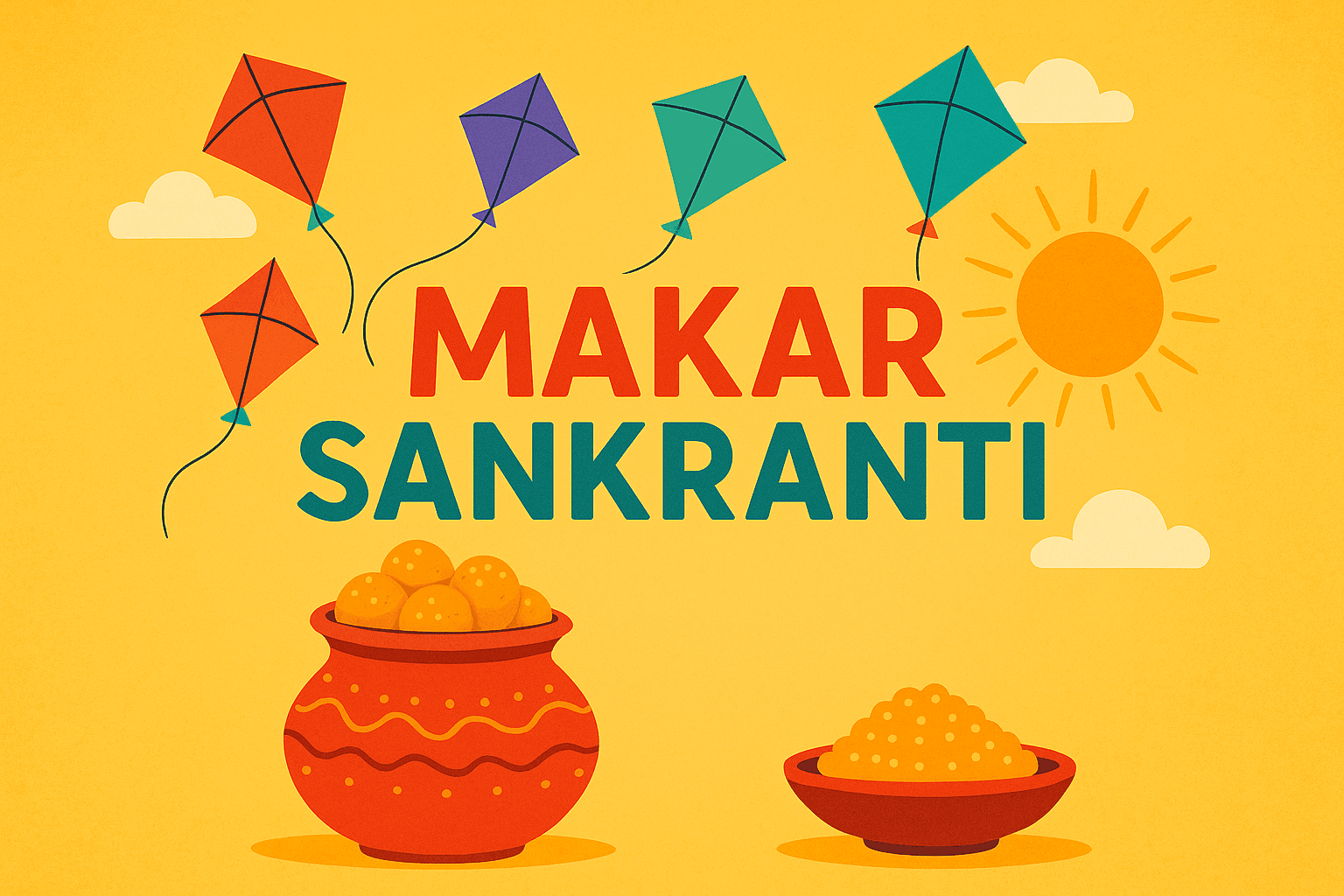
In 2026, Makar Sankranti will be celebrated on Wednesday, 14th January. The festival marks the Sun’s transition into Makara Rashi (Capricorn), symbolising longer days, the end of the winter solstice, and the beginning of the auspicious harvest season in India. In 2026, Makar Sankranti is listed as a Restricted Holiday (RH) in the Government of India calendar. The festival is observed with kite flying, holy dips, charitable acts, preparation of sesame–jaggery sweets, and vibrant regional celebrations.
📜 Holiday Status
Makar Sankranti on 14th January 2026 is recognised as a Restricted Holiday (RH) in the central government holiday list. As per the Central Government leave policy, a government employee can choose two RHs from the list of RHs available for the year.
✨ Significance of Makar Sankranti
Makar Sankranti marks the Sun’s entry into Capricorn, signifying the beginning of Uttarayana, a six-month auspicious period in Hindu tradition. It is celebrated as a major harvest festival, expressing gratitude to nature, livestock, and the farming cycle. The festival emphasises charity (daan), purity, and new beginnings — with sesame and jaggery symbolising warmth, friendship, and togetherness.
🎉 How People Celebrate
Celebrations across India include:
- Flying colourful kites symbolising joy and positivity
- Taking holy dips in rivers like the Ganga, Godavari, or Kaveri
- Preparing festive delicacies like tilgul, chikki, pongal, and pithe
- Performing rituals for prosperity and good health
- Visiting temples and participating in community gatherings
- Offering sesame-based sweets as a gesture of harmony
🗓️ Leave Planning
Since Makar Sankranti falls on Wednesday in 2026, employees opting for an RH can enjoy a mid-week cultural celebration. Those seeking extended time may combine the RH with nearby weekends or personal leave.
🏛️ Daily Life Impact
Here is how Makar Sankranti’s Restricted Holiday status may affect services on 14th January 2026:
| Sector / Service | Status on 14th January 2026 |
|---|---|
| Government Offices (Central) | Open (RH – optional leave) |
| Banks | Open nationwide (some state-level exceptions possible) |
| Schools & Colleges | Open in most states; closed in select regions |
| Stock Market (NSE/BSE) | Open |
| Post Offices | Open |
| Temples / Community Centres | Special rituals and cultural events |
🌍 Regional Variations
Makar Sankranti is celebrated differently across India:
- Pongal in Tamil Nadu (4-day harvest festival)
- Lohri in Punjab (celebrated a day before)
- Uttarayan in Gujarat (world-famous kite festival)
- Magh Bihu in Assam (community feasts and bonfires)
- Poush Sankranti in Bengal (traditional sweets and rituals)
- Khichdi Parv in UP/Bihar (holy dips and offerings)
📖 Interesting Facts
- Makar Sankranti is one of the few Indian festivals based strictly on the solar calendar.
- The festival marks the beginning of a warmer, brighter period known as Uttarayana.
- Sweets made of sesame and jaggery are symbolic of warmth, unity, and goodwill.
- Many regions observe mass kite-flying events attracting thousands of enthusiasts.
💌 Wishes & Messages
- Wishing you joy, prosperity, and new beginnings this Makar Sankranti!
- May the Sun bring warmth, light, and positivity into your life. Happy Makar Sankranti 2026!
- May your days be filled with sweetness, hope, and harmony. Tilgul Ghya, God God Bola!
❓ FAQs
Q. Is Makar Sankranti a Gazetted Holiday in 2026?
No. It is listed as a Restricted Holiday (RH) in the central government holiday calendar.
Q. Are banks closed on 14th January 2026?
Banks remain open nationwide, with possible exceptions in states where the festival is observed as a local holiday.
Q. Why is sesame used during Makar Sankranti?
Sweets made of sesame and jaggery symbolise warmth, friendship, and overcoming negativity during the winter season.